
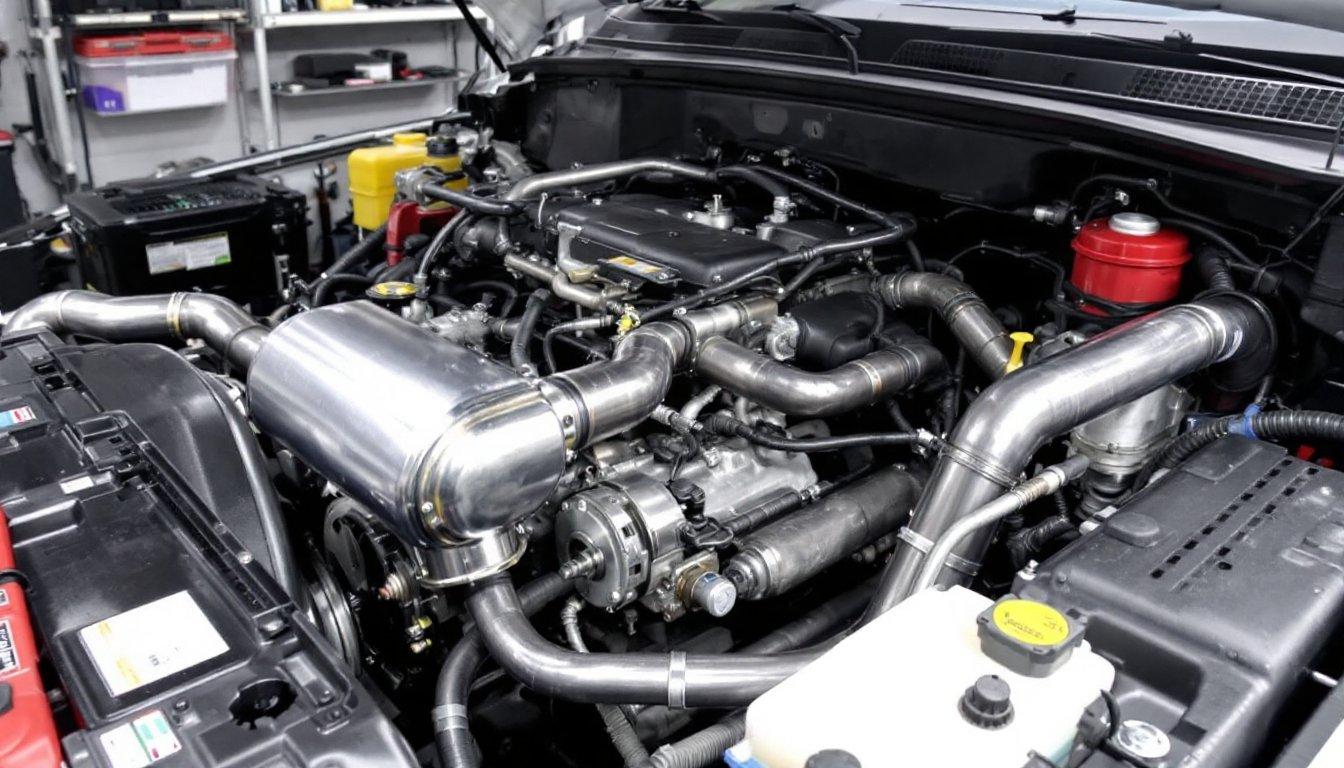

The modern diesel engine is a powerful piece of engineering that delivers high power and efficiency while meeting the strictest emissions standards. The technology that makes this possible, however, also introduces systems such as Exhaust Gas Recirculation (EGR), Diesel Particulate Filters (DPF), and Selective Catalytic Reduction (SCR), which uses DEF, and these systems create owner issues.
Engine efficiency is often impacted, expensive repairs result from blocked DPF filters and broken DEF heaters, and fuel economy decreases over thousands of miles are common issues for drivers. As a consequence of these pain points, interest in emissions modifications to restore performance and reliability has been increasing.
This beginner's guide offers a comprehensive list of hardware upgrades and tuning tips to consider before upgrading to a diesel delete kit, making sure that truck owners are well informed.
Understanding Diesel Emissions Systems & Why Owners Upgrade
The Core Components: EGR, DPF, and SCR (DEF)
The exhaust gases are returned to the intake manifold through the EGR system in order to lower the formation of NOx. The DPF captures soot particles in the exhaust and needs periodic regeneration to remove carbon deposits.
The SCR system supplies DEF (diesel exhaust fluid) into the exhaust gas to chemically reduce NOx. Each system plays an important role in reducing emissions but has failure points that impact performance and reliability.
Common Symptoms of Emissions System Failure
The following are symptoms indicating that the emissions system may be failing.
Familiarize yourself with the warning signs so you can address them before they become a problem. If the DPF is restricted, frequent regeneration cycles may occur, and if the vehicle enters limp mode, a system or sensor has likely failed, and immediate action must be taken.
Excessive ammonia, CO, or HC levels and loss of fuel economy are typical triggers for a check engine light and indicate a system that is not operating under normal conditions.
Benefits of an Emissions Modification System
Effective emissions modifications can have a real impact on many fronts. Owners claim better power and torque, lower exhaust gas temperatures (EGTs), quicker throttle response, and lower maintenance costs. By removing restricting components with a diesel delete setup, engines can breathe freely, lessening thermal stress and increasing the life of the components.
Complete Hardware Checklist for a Full Diesel Modification
Exhaust System & Pipe Components
Installing free-flowing straight-pipe exhaust elements (in either T304 or T409 stainless steel, or a muffler-delete configuration) will restore exhaust efficiency where restrictive DPF/CAT pipe assemblies were installed.
T304 stainless steel has better corrosion resistance properties for long life, and T409 stainless steel has relatively good corrosion resistance at a lower cost. The right diesel delete setup ensures proper fitment and long service life.
EGR Removal & Block-Off Hardware
Properly isolating the cooler from the intake system is achieved by using quality EGR block-off hardware, such as billet aluminum block-off hardware, nickel-plated coolant bypass line fittings, and Viton high-temperature seals. Each of these components has to be able to withstand high temperature and pressure without leaking.
DEF System Deactivation & Sensor Relocation
Proper DEF system deactivation requires disconnecting the DEF system injectors and tanks and protecting the factory wiring harness connectors from corrosion. Sensor relocation or block-off fittings in a diesel DEF delete kit help keep the connection area clean and protected from contamination that might affect electrical integrity.
Diesel Tuning Essentials: Matching Hardware with Custom Software
Why Physical Hardware Requires Custom ECM Tuning
Hardware modifications immediately trigger ECM limp mode without recalibration. The engine control module requires updated parameters to operate correctly without the removed emissions equipment. Custom tuning adjusts fueling, timing, and boost management to match the new hardware configuration.
Handheld Flashers vs. Custom ECM Calibration
The engine control module needs to be programmed with new engine parameters to run properly without the emissions equipment. Custom tuning involves changes to fueling, timing, and boost management to suit the new hardware setup.
Flash tuners also offer pre-loaded tunes for ease of use and custom parameter maps for optimized calibration for certain modifications. To optimize the tuning solution, it is important to match the tuning to the hardware installed.
Step-by-Step Installation & Maintenance Best Practices
Pre-installation preparation involves disconnecting the battery, spraying penetrant on rusted exhaust flange bolts, and preparing sensor plugs for easy identification. The installation process is straightforward: first bypass the EGR and then replace the under-truck pipe.
ECM reflashing includes reading the stock files, flashing the modified tunes, and clearing the diagnostic trouble codes. After installation, coolant levels are checked, exhaust leaks are checked for, and gauge operation is checked.
Conclusion
When done right, emissions modifications can change the driving experience, with lower EGTs, restored engine reliability, and better fuel economy. Utilize precision-machined hardware and matched tuning solutions for durability and hassle-free operation.