

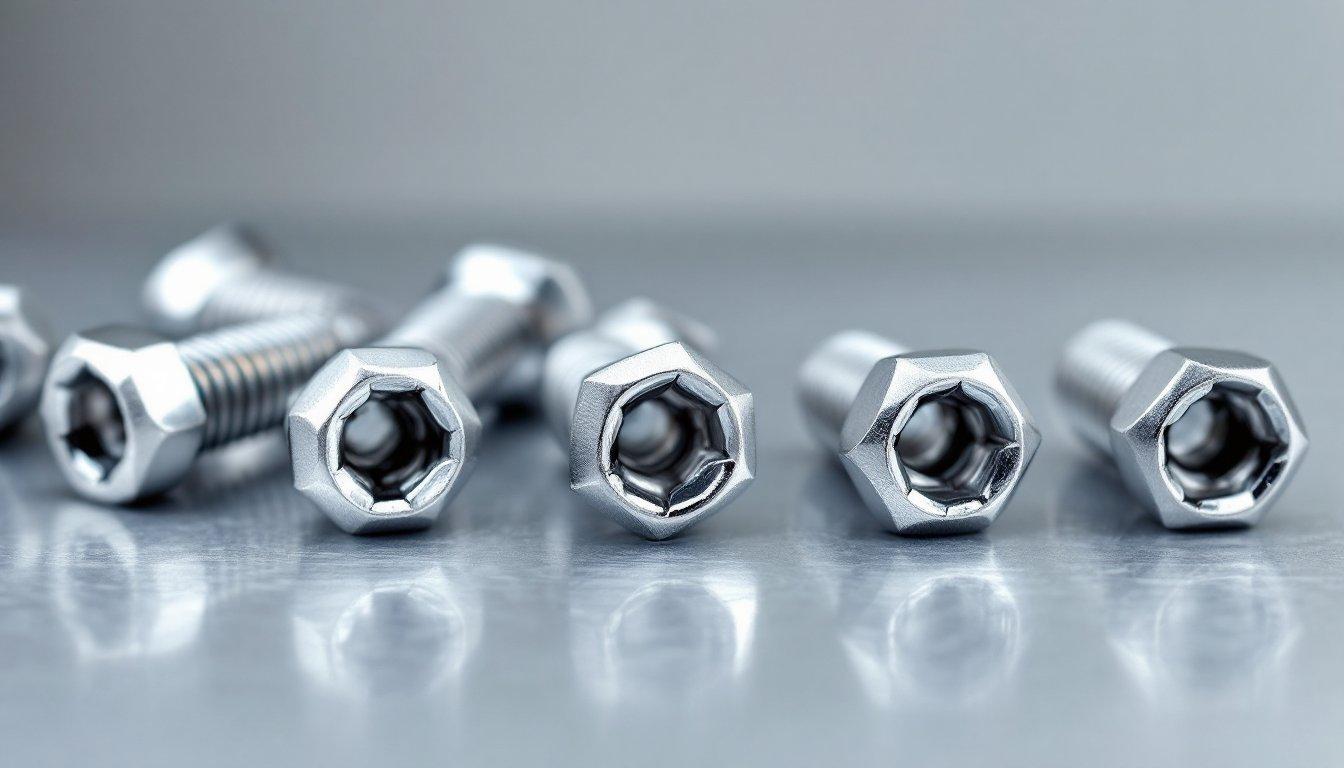

Tools, operator access, and headroom are all severely limited in tightly packed assemblies. Socket head cap screws address those limits with an internal hex drive and a compact cylindrical head. Their geometry supports controlled tightening where a conventional wrench cannot fit.
This arrangement keeps the components close while maintaining reliable clamping and service access. Selection still depends on load, material, thread, and installation method. The following sections explain why this fastener suits close-fitting machine assemblies.
Compact Geometry Improves Clearance
Machine builders use internal drives when nearby parts block a wrench. An Allen wrench enters the recess straight on, even inside a bored or recessed assembly. This keeps the tool aligned during tightening and service. For that reason, socket head cap screws suit applications where access is narrow but clamping must remain dependable. Their narrow heads leave clearance around adjacent components and fit machined plates, brackets, housings, and fixtures.
A socket head cap screw also reduces the clearance required around a fastener. Standard external hex heads need room for a wrench to swing through an arc. An internal hex drive needs access mainly above the head, allowing engineers to position hardware closer together.
Internal Drives Support Controlled Tightening
The hex socket engages inside the head rather than around its exterior. This contact lets an installer apply torque through a properly sized hex key, hex bit socket, or torque wrench. A correctly matched tool reduces drive damage during installation and removal.
The drive also limits cam-out compared with many external or cross-recessed screw designs. This matters in assemblies that require repeated service, where damaged heads increase removal time and replacement work.
Head Shape Affects the Assembly Surface
A standard socket head cap screw has a taller cylindrical head than a low-head version. The additional head height provides more drive depth and suits applications that require substantial clamping force. The head remains narrow across its diameter, preserving side clearance.
A flat-head socket cap screw sits flush when the assembly surface needs a smooth profile. A button-head version uses a rounded, lower-profile shape for lighter-duty clamping. Each head style addresses a different clearance or surface requirement.
Thread and Material Choices Matter
Thread selection should match the mating hole, expected load, and service requirements. Coarse threads suit many general assembly tasks, while fine threads provide less thread movement per turn. Metric versions fit assemblies built around metric measurements.
Alloy steel supplies high strength for demanding machine work. Stainless steel suits applications where corrosion resistance matters. Black oxide and zinc finishes provide additional choices for steel fasteners, and the selected finish should match the surrounding environment.
Installation Requires Careful Fit
The hex key must fully match the socket size. A loose or undersized tool concentrates force on the socket corners and increases the chance of stripping. The installer should clean the recess before engagement, especially when debris collects inside a recessed assembly.
A torque wrench with the correct hex bit provides consistent tightening when a specified torque value applies. The fastener should enter the mating threads smoothly by hand before a tool applies force. Cross-threading damages both the screw and the receiving hole.
Check the Assembly Before Ordering
The design review should confirm head clearance, drive access, thread size, length, material, and finish. A screw can fit the hole yet fail the assembly if its head interferes with a moving part or its drive lacks tool access.
Socket product categories include standard, button-head, flat-head, low-head, metric, and set-screw styles. Comparing these choices with the assembly drawing helps prevent substitutions that change surface height, clamping behavior, or service access.
Conclusion
Socket head cap screws suit tight assemblies because their internal drive and narrow cylindrical head preserve access around crowded components. Performance depends on selecting the correct head style, thread, material, length, and tool fit. Before ordering, compare the fastener dimensions with the assembly drawing, then confirm the required hex key and tightening method. This check prevents interference, drive damage, and service delays after installation.