

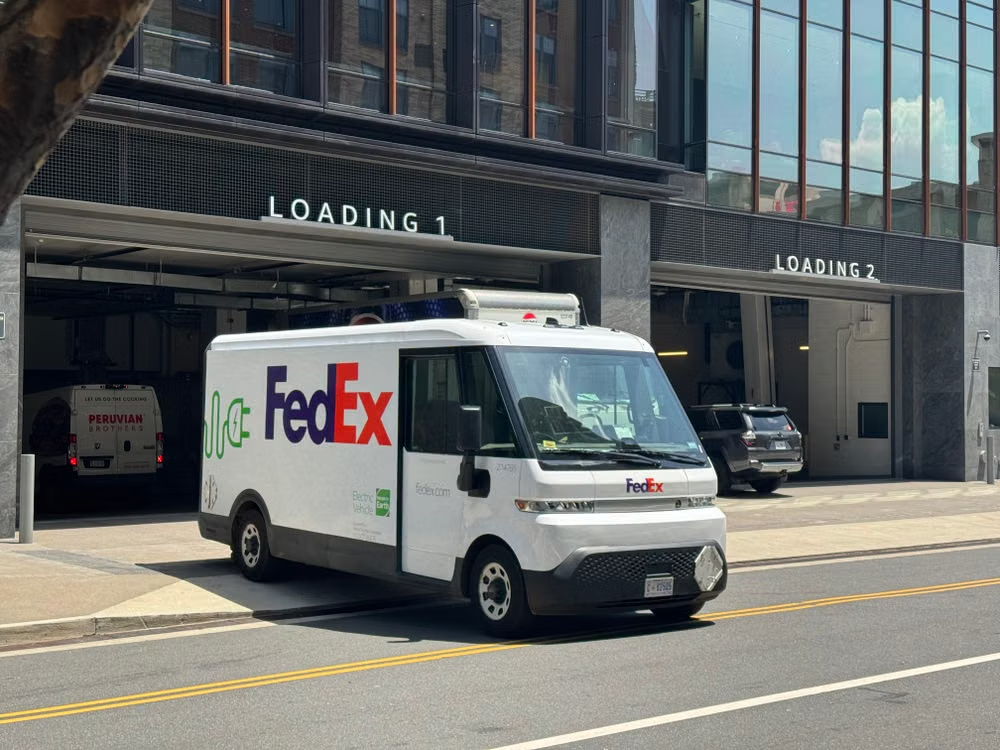

Getting around in urban supply chains during rush hour meant one of two very unsatisfying things: relying on massive, diesel-chugging semi-trucks or depending on inefficient delivery schedules. Today, as urban density rises and the demand for zero-emission commutes grows, a vibrant multi-modal hybrid is surging to the forefront.
Coupling the agility and efficiency of modern medium- and heavy-duty electric trucks with strategic regional distribution hubs is reshaping supply chains. This shift is solving the complex first-mile and last-mile freight problem without sacrificing speed, cargo capacity or convenience.
Bridging the First-Mile, Last Mile Divide
While long-haul freight trucks are ideal for moving large volumes of goods through different states, larger trucks are inconvenient and costly for maneuvering congested city streets. If a retailer or warehouse is in the middle of a bustling downtown area, a standard 18-wheeler will cause traffic congestion, produce idling emissions, and require difficult parking maneuvers.
This is where the urban delivery truck comes into play. Medium-duty electric and maneuverable box trucks make it through the final leg from regional shipping hubs straight to the downtown retailer. Logistics networks are beginning to use these advantages by using flexible vehicle sizes, micro-hubs, and quiet, zero-emission trucks that can be driven at night without disrupting residents.
Safety Practices in Commercial Thoroughfares
With many commercial vehicles on the road at once, truck drivers who use roads that take them from a main freight distribution hub to a local community are constantly dealing with high-density arterial streets. This is the area of the road shared with pedestrians, vehicles that are not commercial trucks and other commuters such as cyclists.
While collisions between vehicles on busy freight lines will result in plaintiffs contacting truck accident attorneys in Valdosta or any truck accident lawyer who can assist with such cases, it is prudent to proactively avoid these situations altogether by exercising appropriate safety precautions while on dense routes.
There are a number of basic strategies employed by professional drivers and fleet managers that maintain the safety when trucks use a shared commercial corridor:
- Collision prevention technology: Blind spot detection, three hundred and sixty degree camera arrays and parking sensors allow drivers to have complete visibility of the road.
- Strategically dispatching vehicles: With the help of telemetry data companies can ensure that their trucks primarily drive along pre-designated truck routes and freight corridors in order to avoid narrow residential roads.
- Maintain high visibility: Visibility strips and LED daytime lighting allow smaller vehicle and passenger cars to better gauge a truck’s turning trajectory and overall placement on the road.
Fleet Maintenance, Depot Security and Charging Infrastructure
Hardware management for trucks, along with depot security and charging infrastructure, are key aspects of operating dependable truck schedules. While electric truck fleet operators may worry about range anxiety, this fear can be alleviated through careful fleet management of charging infrastructure and the use of optimal routes. Modern commercial battery packs provide more than enough energy for typical local last mile deliveries.
Depot security and charger maintenance are just as critical. It is important to protect large investments made by modern commercial vehicle fleets. Monitored depot security, smart grid infrastructure and protected overnight charging stalls are commonly used to deter would-be thieves and ensure that the trucks are charged for morning delivery runs.
A Future of Cleaner and Smarter Transportation
Smart transportation can exist when heavy-duty, long-haul transportation networks are used in conjunction with zero-emission and local delivery routes, thereby producing solutions that efficiently reduce carbon footprints, urban gridlock, and thousands of dollars in maintenance and fuel.