

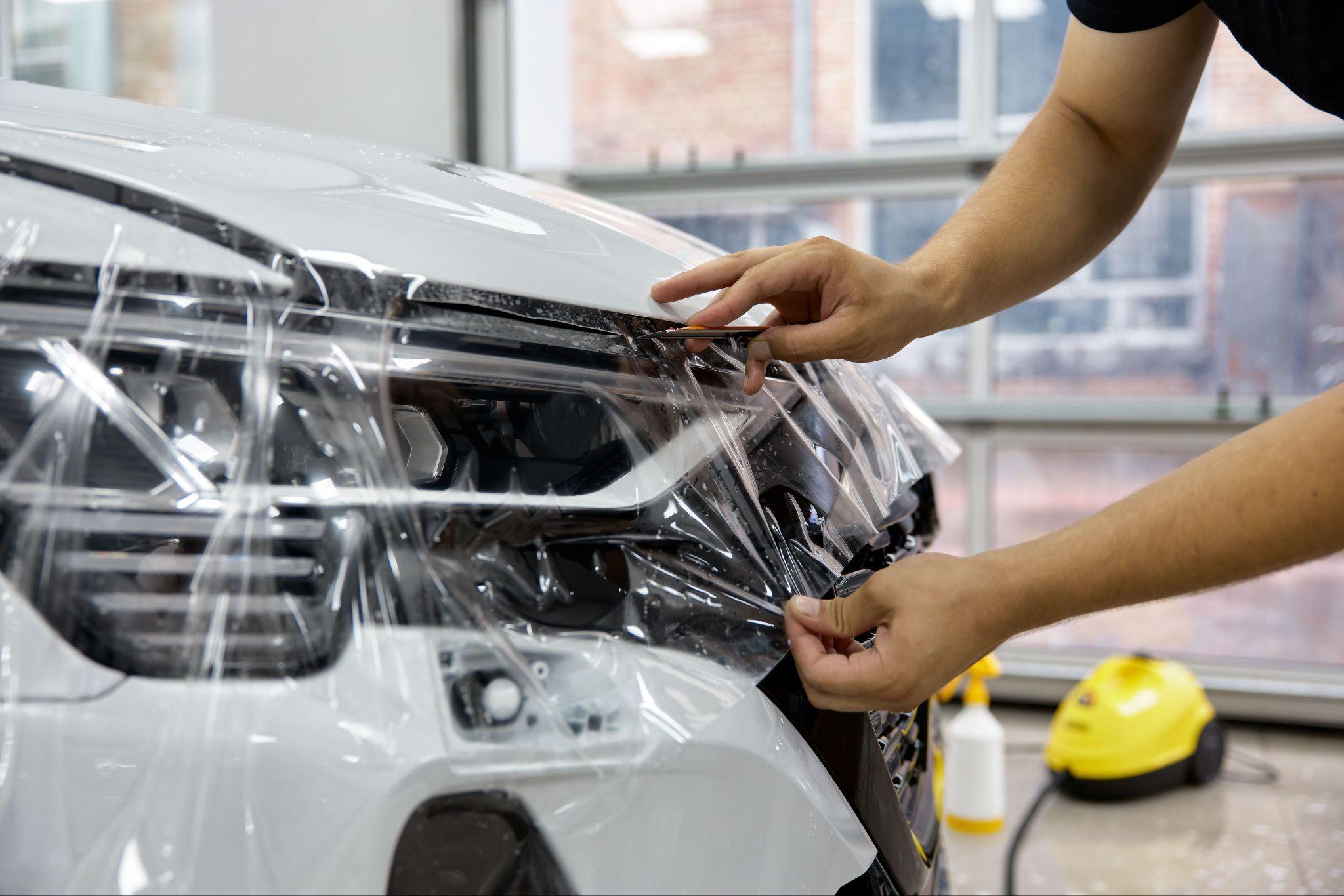

Chicago winters are hell for paint. Road salt starts coming out in November, and the construction zones on Kennedy and I-90 seem to go on forever. Your car’s paint is going to face a real challenge regardless of how many times you wash and wax it. Full car PPF is a great solution, but not every car needs it. Moreover, not every film or shop is going to deliver on what they advertise.
Which Cars Need It Most
EVs are at the top of the list. Teslas and similar models use a soft, water-based paint, and the front is in the line of fire. Factory paint on the hood can be gone in months if it isn’t protected. The same applies to the Hyundai IONIQs and the Kia EV6 and EV9.
The colour of your car also matters, as dark cars show damage by a long shot. On black, deep blue or dark red paint, every chip is white. A chip on a dark hood is about five times more visible than the same chip on a white or silver car. A black Accord can look old after one winter in Chicago.
Expensive cars make the maths simple. A single panel repaint on a BMW, Mercedes, or Porsche is $2-5k+. A front hood refinish can cost more than a full front-end PPF job. Once you’re over $60k the decision is made.
Highway drivers get the same priority. The mileage you get on I-90 is 3 to 5 times higher than in city driving, and that translates to 3 to 5 times the chip exposure. Sometimes the way you drive makes the difference, not what you drive.
What Modern Films Actually Do
Today’s PPF is not just a plastic shield. They are TPU films with self-healing properties. Older films yellowed, faded and peeled. Modern films resist UV discoloration, heal light scratches with heat or on their own, and hold their clarity for a decade or more.
- XPEL is what most people go to first. Ultimate Plus has a 10-year transferable warranty; it will heal light scratches with heat, and the DAP pattern library is good for pretty much every car you can think of.
- 3M have been making film for longer than anyone. Scotchgard Pro Series 200 is on a par with XPEL in terms of clarity, impact resistance and warranty. It’s typically 10-15% cheaper, and for a daily driver the protection is essentially the same.
- Avery Dennison is the more understated of the two options. Supreme Defence Gloss uses a 6.5mil polyurethane film and comes with a 10-year warranty. It’s very clear over dark paint, and the colour PPF line allows you to change the look without sacrificing the protection.
Why Proper Installation Matters
Chicago’s cold weather can slow down curing, so a climate-controlled installation bay is a must. Pre-cut plotter patterns have pretty much taken over from hand trimming. XPEL’s DAP system uses very precise templates for thousands of vehicles, keeps the blade away from the paint and minimizes the risk of cuts that can later crack. For vehicles like the BMW M2 with deep air intakes and all sorts of complex bumpers, the computer cut patterns are very useful.
Prep is also important. A clay treatment will remove the embedded iron, tar and industrial fallout that would otherwise be left behind under the film. The film floats on a slip during the wet installation until it’s in position. Squeegee pressure has to be right: not too little (you end up with trapped moisture) and not too much (you risk stretching the film). This process can be handled right only by people who have learned the nature of film through hundreds of installations.
Whole-car PPF is one of the few upgrades that pays you back when you sell. Pick a film that matches how long you plan to keep the car, then pick a shop based on how they install it, not what they charge. Do that, and your paint will still look factory-fresh after several Chicago winters.