

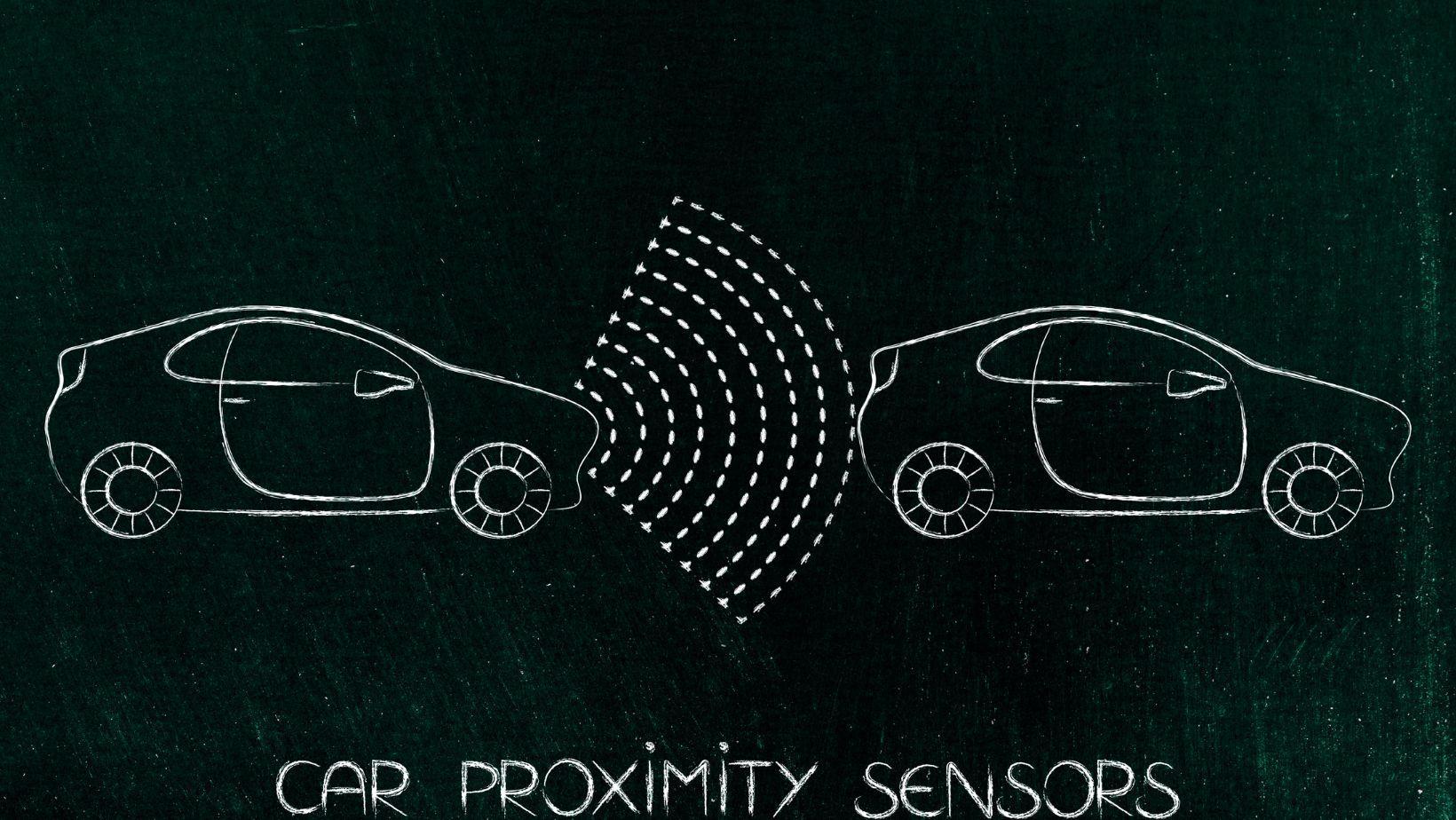

If your car beeps at you every time you get too close to a wall, a trolley, or another bumper in a car park, you have proximity sensors to thank. What used to be a luxury feature reserved for high-end saloons is now standard equipment on everything from city hatchbacks to full-size SUVs. Most drivers never think about how these systems work until one starts acting up. Then the questions come fast. Why is it beeping at nothing? Why did it stop working after a wash? Can I actually fix this myself?
This guide breaks down what proximity sensors actually do, the common ways they fail, and what to check before you book a garage appointment (or reach for a screwdriver yourself).
What Are Proximity Sensors, Really?
Proximity sensors are the small round or oval discs embedded in your front and rear bumpers. They are part of your car’s parking assist system, and their job is simple: measure the distance between your bumper and the nearest object, then translate that into an audible warning (and often a dashboard display) as you get closer.
Most passenger vehicles use ultrasonic sensors, which send out high-frequency sound waves and measure how long they take to bounce back. A few premium models supplement this with electromagnetic or capacitive sensing strips built into the bumper trim, which detect changes in an electric field rather than sound reflection. The type fitted to your car determines how it is diagnosed and replaced, which is worth knowing before you assume a fault is more serious than it is.
- Ultrasonic sensors: The most common type, visible as small discs on the bumper
- Electromagnetic sensors: Hidden behind the bumper skin, no visible disc
- Radar-based sensors: Used in more advanced blind-spot and cross-traffic systems, distinct from basic parking sensors
- Camera-assisted systems: Increasingly paired with sensors for a combined 360-degree view
Common Signs Your Proximity Sensors Are Failing
Before assuming the worst, it helps to recognise the usual failure patterns. Most issues fall into one of a few categories.
- Constant or random beeping with nothing nearby, often caused by dirt, ice, or a loose sensor housing
- No response at all, even when reversing toward an obvious obstacle
- Inconsistent readings, where the system works sometimes and not others
- A warning light or error message on the dashboard referencing the parking assist system
- Muffled or distorted beeping, which usually points to a sensor partially blocked by mud, snow, or a badly fitted aftermarket bumper cover
A dirty sensor is by far the most common culprit, and it is also the easiest to fix. Road grime, wax buildup from an automatic car wash, or a light coating of ice can all interfere with the ultrasonic signal without damaging the sensor itself.
DIY Checks You Can Do Before Calling a Mechanic
Not every proximity sensor issue needs a workshop visit. A few checks take fifteen minutes and cost nothing.
- Clean each sensor by hand. Use a soft microfibre cloth with warm water, working around the disc rather than scrubbing directly across it. Avoid high-pressure washers pointed straight at the sensor face.
- Check for physical damage. Cracks, chips, or a sensor sitting slightly proud of the bumper surface usually mean a stone chip or minor parking knock has done damage.
- Inspect the wiring harness, if you’re comfortable removing the inner bumper liner. Rodents and general wear can expose or sever the thin wiring that connects each sensor to the control module.
- Check for aftermarket accessories. Bumper protectors, tow bar covers, or badly fitted number plate surrounds can sit directly in a sensor’s detection path and trigger false readings.
- Reset the system. On many cars, disconnecting the battery for a few minutes (with the ignition off) will clear a temporary fault code and restore normal operation if nothing is physically wrong.
If none of these resolve the issue, the sensor itself, its wiring, or the control module may need replacing, and that’s where things move from a driveway fix to a proper diagnostic job.
When It’s Time to See a Professional
Once you’ve ruled out dirt, ice, and obvious wiring damage, a persistent fault usually points to one of three things: a failed sensor unit, a damaged wiring harness, or a fault in the parking assist control module. Diagnosing which one it is requires a scan tool that can read manufacturer-specific fault codes, something most home garages don’t have on hand.
This is also where sourcing matters. A worn or cracked ultrasonic sensor is a relatively cheap part, but not every local parts counter stocks the exact type, mounting bracket, or connector your model needs, particularly for older vehicles or less common makes. Workshops that do a lot of parking-sensor and diagnostic work tend to keep an account with a proper industrial and electronics parts distributor rather than relying on generic aftermarket listings.
For workshops and technicians in Australia handling this kind of repair regularly, it’s worth knowing that RS Australia carries a wide range of inductive, capacitive, and ultrasonic proximity sensors from RS PRO, BALLUFF, Sick, and Telemecanique, alongside the connectors and mounting hardware needed for a proper fit rather than a temporary patch. Their catalogue is aimed at automation and maintenance teams working on industrial machinery, but the same sensor families and specifications overlap closely with the units used in automotive parking assist systems, which makes it a practical option when a specific sensor type is hard to track down locally. Australian workshops ordering stocked items before 5pm AEST on a weekday can generally expect next-day delivery, and business accounts qualify for free delivery on qualifying orders, which matters if you’re waiting on a single part to finish a job. If you’re a technician who has gone through several generic replacement sensors without success, a proximity sensors distributor with proper datasheets and a broader range of housing formats can save a second comeback visit.
Preventing Future Sensor Problems
A little routine care goes a long way toward keeping your parking assist system reliable.
- Hand-wash the bumper area rather than relying solely on automatic car washes with high-pressure jets
- Avoid pressure-washing directly at the sensor face from close range
- Clear ice and snow gently rather than scraping across the sensor discs
- Have sensors checked during routine servicing, especially after any minor parking knock
- Choose bumper protectors or accessories that don’t overlap the sensor zones
Final Thoughts
Proximity sensors are one of those features that only get attention once they stop working, but a bit of basic understanding saves both money and frustration. Most faults start as something simple: dirt, ice, or a loose connection, and a quick clean or visual check resolves the issue more often than not. When the problem turns out to be a genuinely failed sensor or wiring fault, knowing what type of sensor your car uses and where to source a proper replacement makes the repair faster and less likely to repeat. Treat your parking sensors the way you’d treat any other safety feature on your car: check them occasionally, clean them regularly, and don’t ignore the warning signs when they show up.