

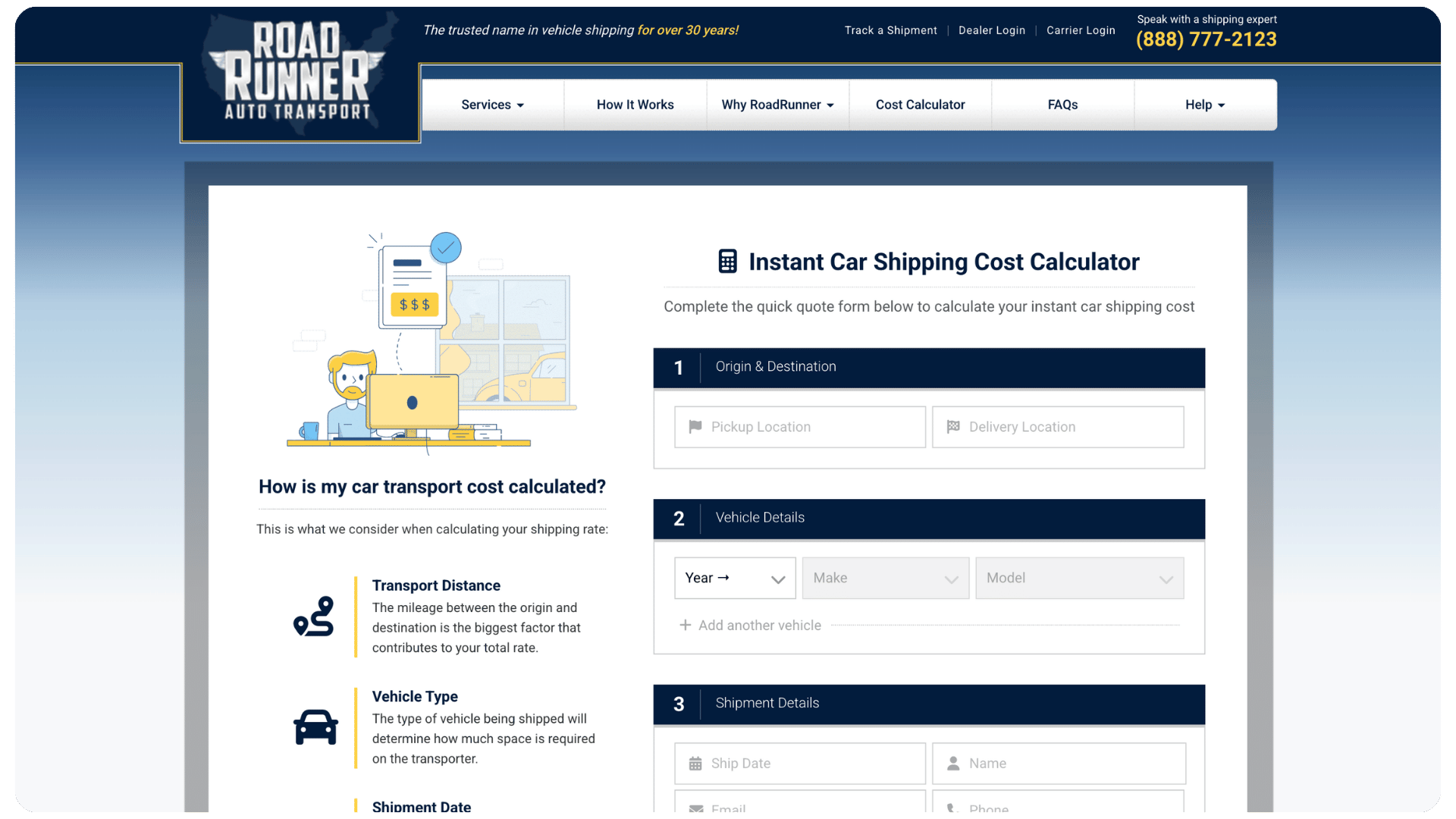

The first thing most people Google is "how much does it cost to ship a car" and the answers they find are all over the place.
A few Reddit threads, a couple of outdated blog posts, and suddenly they're working from numbers and assumptions that haven't been accurate in years.
Misinformation gets recycled until it sounds like fact.
Even running your route through an auto transport pricing tool won't help much if you're still operating on bad assumptions.
Before you request a car shipping estimate or lock in a budget, here are nine myths that still trip people up.
1. The Quote You Get Online Is the Final Price
It almost never is. Most online car shipping estimates are ballpark figures generated by algorithms that don't account for the specifics of your shipment.
Real car shipping cost depends on variables that shift weekly – fuel surcharges, carrier availability on your specific corridor, and even the time of the month.
A car shipping quote pulled on a Tuesday afternoon might look different by Friday.
The estimate gets you in the door.
The binding price comes after a broker or carrier reviews the actual details – vehicle dimensions, pickup accessibility, and whether your route has enough carrier volume to stay competitive.
Treat any initial number as a starting point, not a commitment.
2. All Car Shipping Companies Charge Roughly the Same
This one costs people real money. Pricing across the auto transport industry varies significantly, sometimes by hundreds of dollars for the same route and vehicle.
One carrier might specialize in Southeast U.S. corridors and price that lane aggressively, while another focuses on cross-country hauls from California to New York.
The variation comes down to fleet size, dispatch networks, overhead costs, and how badly a carrier needs to fill a truck on a given week.
Comparing three to five carriers is a minimum if you want a realistic picture of what your lane actually costs.
3. Enclosed Transport Is Always Ridiculously Expensive
Enclosed shipping does cost more than open transport – nobody's arguing that.
But when people ask how much it costs to ship a car in an enclosed trailer, the gap isn't as dramatic as they expect.
On a typical cross-country route, the difference might be $300 to $600, not the double-the-price scenario people imagine.
For vehicles worth over $50,000, collector cars, or anything with custom paintwork, that premium is essentially cheap insurance.
The real question isn't whether enclosed transport costs more.
It's whether the vehicle you're shipping justifies the exposure risk of riding on an open trailer across 2,000 miles of highway debris and weather.
4. Summer Is Always the Most Expensive Time to Ship
Summer is busy, sure. But the most expensive stretches often hit in January and February, especially on northbound routes.
Snowbird season drives a massive demand spike as retirees ship vehicles between the Midwest and Florida or Arizona.
Carriers heading south have full trucks.
Carriers heading north have empty ones.
That imbalance drives prices up in both directions.
Late fall and early spring tend to offer the calmest pricing windows.
Car shipping cost follows supply and demand curves that don't always line up with what you'd expect from a "peak season" label.
Any car shipping estimate you get in January for a Florida route will reflect that seasonal crunch.
5. Door-to-Door Delivery Means Your Actual Front Door
This catches almost everyone the first time.
Door-to-door auto transport means the carrier gets as close to your address as their equipment safely allows.
That's not always your driveway.
An 80-foot car hauler can't navigate cul-de-sacs, narrow residential streets, or roads with low-hanging tree branches.
In practice, you might meet the driver at a nearby parking lot or wider street.
It's still far more convenient than terminal-to-terminal shipping, which requires you to drop off and pick up at a depot.
Just don't expect a carrier rig parked in front of your garage.
6. Your Vehicle Will Ship Within a Day or Two of Booking
Standard auto transport operates on carrier availability, not instant dispatch.
Most shipments through a broker take three to seven days for a carrier match, sometimes longer on less popular routes.
Rural Montana to rural Vermont isn't going to move as fast as Los Angeles to Houston.
If you need guaranteed pickup within a narrow window, expedited shipping exists – but it comes with a premium.
Planning two to three weeks ahead of your actual need date gives you the most flexibility and typically the best car shipping cost.
It also gives you room to compare more than one car shipping quote without feeling rushed into a decision.
7. The Cheapest Car Shipping Quote Is the Best Deal
Going with the lowest bidder in auto transport is one of the fastest ways to end up with a delayed shipment, poor communication, or a carrier that cancels at the last minute.
Rock-bottom car shipping quotes often come from brokers who undercut the market to win your deposit, then struggle to find a carrier willing to actually haul at that price.
What happens next is predictable: the broker comes back asking for more money, or your vehicle sits in a dispatch queue while higher-paying loads get priority.
A fair mid-range quote from a carrier with verified reviews and a solid DOT record will almost always outperform the bargain option.
If a car shipping estimate looks too good to be true, it usually is.
8. You Should Empty Your Gas Tank Before Shipping
A common piece of advice says to drain your tank to reduce vehicle weight and lower your car shipping cost.
In reality, most carriers want you to leave about a quarter tank of fuel in the vehicle.
They need enough gas to load, unload, and make short-distance moves on and off the trailer.
A completely empty tank can actually create problems – vapor buildup, fuel pump strain, and the inconvenience of needing a gas station immediately after delivery.
A quarter tank strikes the right balance between keeping weight down and keeping the vehicle functional during transport.
9. Insurance Is Automatically Included and Covers Everything
Carriers are required to carry cargo insurance under federal regulations, and that coverage does apply to your vehicle during transport.
But "coverage" doesn't mean "full replacement value with zero hassle."
Policy limits vary by carrier, deductibles apply, and the claims process can be slow.
Pre-existing damage that wasn't documented in the Bill of Lading inspection becomes nearly impossible to claim.
Before your vehicle gets loaded, photograph every panel, wheel, and glass surface.
Note every scratch, dent, and chip on the inspection report.
That documentation is worth more than any insurance policy if something goes wrong during transit.
The Bottom Line
Most of these myths persist because they contain a tiny grain of truth wrapped in a lot of assumptions.
Car shipping cost isn't mysterious – it follows predictable patterns driven by distance, vehicle type, seasonal demand, and route popularity.
The people who overpay or get burned are usually the ones operating on outdated information or skipping the comparison step entirely.
Knowing how much it costs to ship a car starts with getting multiple car shipping quotes from vetted carriers, not just grabbing the first car shipping estimate that pops up.
Read the fine print on insurance.
And give yourself enough lead time that you're not paying rush premiums for a problem you could've avoided with an extra week of planning.