

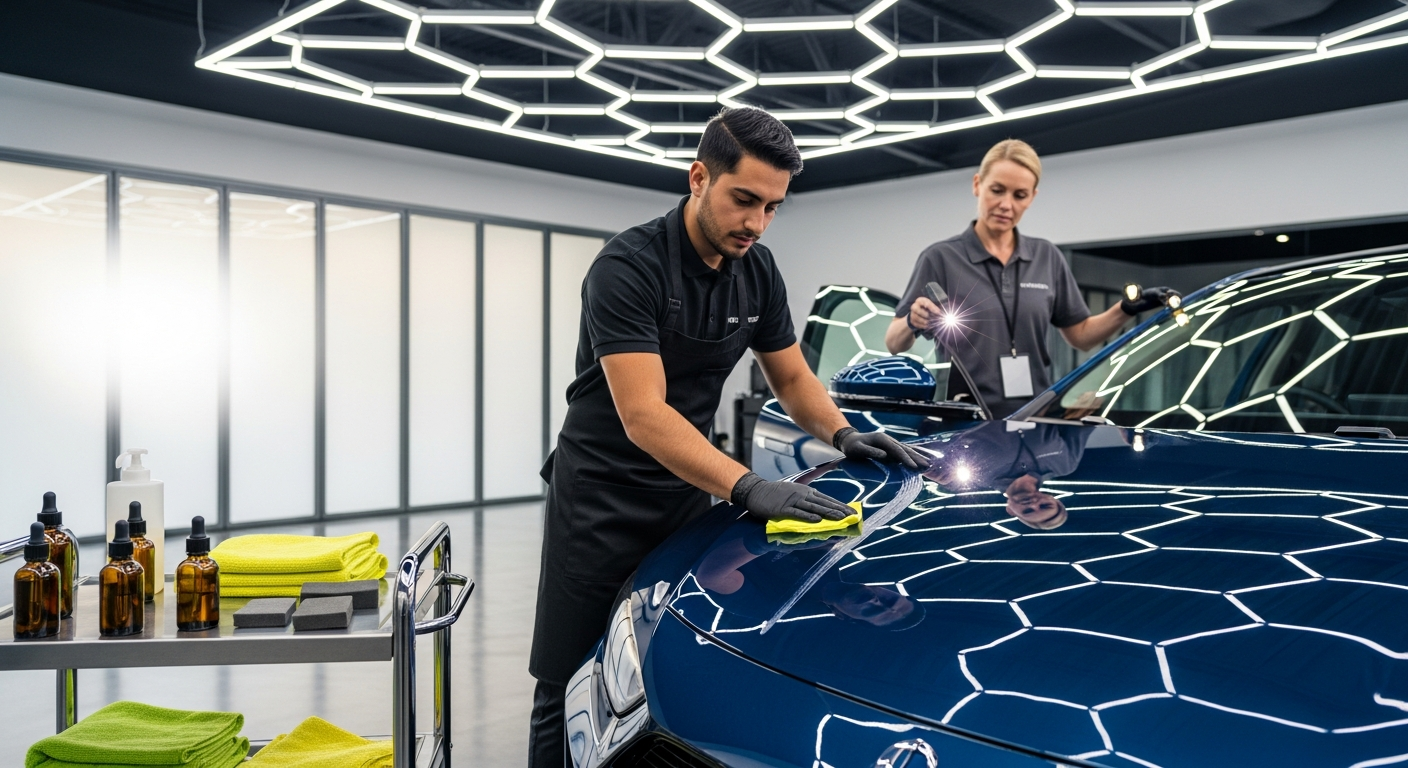

Electric vehicle owners are holding onto their cars longer and becoming much more serious about paint protection. Forget temporary wax jobs. The shift toward commercial-grade ceramic coatings is gaining momentum, and the numbers tell the story.
In 2026, North America accounted for about 28% of global car detailing revenue. The exterior detailing segment alone accounted for 65% of total revenue, driven largely by advanced chemical bonding techniques. As vehicle prices level off, buyers are realizing that protecting their investment takes more than a quick polish.
Beyond Carnauba: How Ceramic Coatings Actually Work
Molecular Bonds vs. Traditional Wax
Traditional carnauba wax sits on top of the clear coat. It gives you a nice temporary shine, sure, but it melts away under intense sun in a matter of weeks. Nano-ceramic coatings work differently. They penetrate the porous structure of factory paint and form a semi-permanent molecular bond that lasts years, not months.
Demand for advanced hydrophobic layers (coatings that actively repel water and contaminants) has surged, especially in regions where road salt and chemical staining are constant threats. And the market trajectory backs this up: the global ceramic coating market is projected to hit $19.20 billion by 2030.
Here’s a quick comparison of the main paint protection options available right now:
| Protection Type | Durability | Hydrophobicity | Chemical Resistance | Average Cost | Best For |
| Traditional carnauba wax | 1 to 3 months | Low to moderate | Low | Low ($) | Short-term showroom shine |
| Polymer sealants | 6 to 12 months | Moderate | Moderate | Medium ($$) | Seasonal protection |
| Nano-ceramic coatings | 2 years to lifetime | Extreme | High | High ($$$) | Long-term daily drivers |
| Paint protection film (PPF) | 5 to 10 years | High | Extreme (physical) | Premium ($$$$) | High-impact highway driving |
Why EV Owners Are Adopting Ceramic Faster Than Anyone Else
The Design Problem Most People Overlook
Ever noticed how most EVs have flat front fascias with no traditional grilles? That design choice creates a massive, unbroken painted surface right at the front of the car. It looks sleek, but it’s basically a magnet for rock chips and highway debris.
Luxury EV owners are catching on quickly. They want their factory finish to stay intact, and professional detailing with ceramic protection can boost resale value by up to 15%. That’s not vanity; it’s financial strategy.
What’s Actually Damaging Your Paint
If you’re driving an EV (or any vehicle, really), here are the biggest threats to your clear coat:
- Road salt and brine: highly corrosive agents used in winter that eat away at unprotected clear coats and undercarriages
- Chemical staining: acidic contaminants like tree sap and bird droppings that can permanently etch into paint without a ceramic barrier
- Micro-abrasion: fine scratches and swirl marks from improper car washes and airborne road grit
- UV oxidation: prolonged sun exposure that fades and degrades your car’s original color depth
What Top-Tier Protection Looks Like in Practice
Product quality matters, but so does the application process. A ceramic coating applied over contaminated or defective paint won’t bond properly, leaving you with locked-in imperfections under a shiny surface. That’s why the best facilities prioritize multi-stage decontamination and full paint correction before any coating goes on.
One facility setting a strong example is MNV Auto Detailing, a surface protection specialist serving Toronto and the Greater Toronto Area. Their technicians follow a comprehensive defect-removal process before applying multi-layer nano-ceramic coatings such as Ceramic Pro in controlled environments. Given Toronto’s climate (brutal winter road salt followed by punishing summer UV), this kind of thorough prep isn’t optional; it’s the difference between a coating that holds up for years and one that fails within months.
MNV Auto Detailing backs its two-layer ceramic packages with a lifetime warranty and also offers mobile detailing across the GTA. With the paint protection film market projected to reach $940.67 million by 2034, strong warranties are becoming a key trust signal for anyone investing in long-term protection.
How to Vet a Coating Installer
Facility Standards and Certifications
Ceramic coating isn’t a weekend DIY project. The process demands specialized environments with precise temperature and humidity control. High-end facilities typically use over 100 spotlights to inspect vehicles from every angle, ensuring treatments are perfectly leveled and cured before the car leaves.
So what should you actually look for? Certifications from brands like 3M, Llumar, or Ceramic Pro are a solid starting point. Ask about their curing environment, dust control measures, and whether their technicians are insured. If a shop can’t answer those questions confidently, keep looking.
Protecting Your Investment for the Long Haul
The jump from traditional wax to ceramic technology isn’t just about aesthetics. Well-maintained paint can slow depreciation to just 24% over three years. That’s a significant financial edge for any car owner.
As EV design continues to evolve, protection methods must keep pace. A nanoceramic barrier reduces your weekly wash time, prevents contaminants from bonding to the surface, and preserves that factory finish for years. If you’re driving an EV in 2026, it’s one of the smartest upgrades you can make.